
-

-


Follow Us
-

 On Facebook
 On Flipboard
 On Twitter
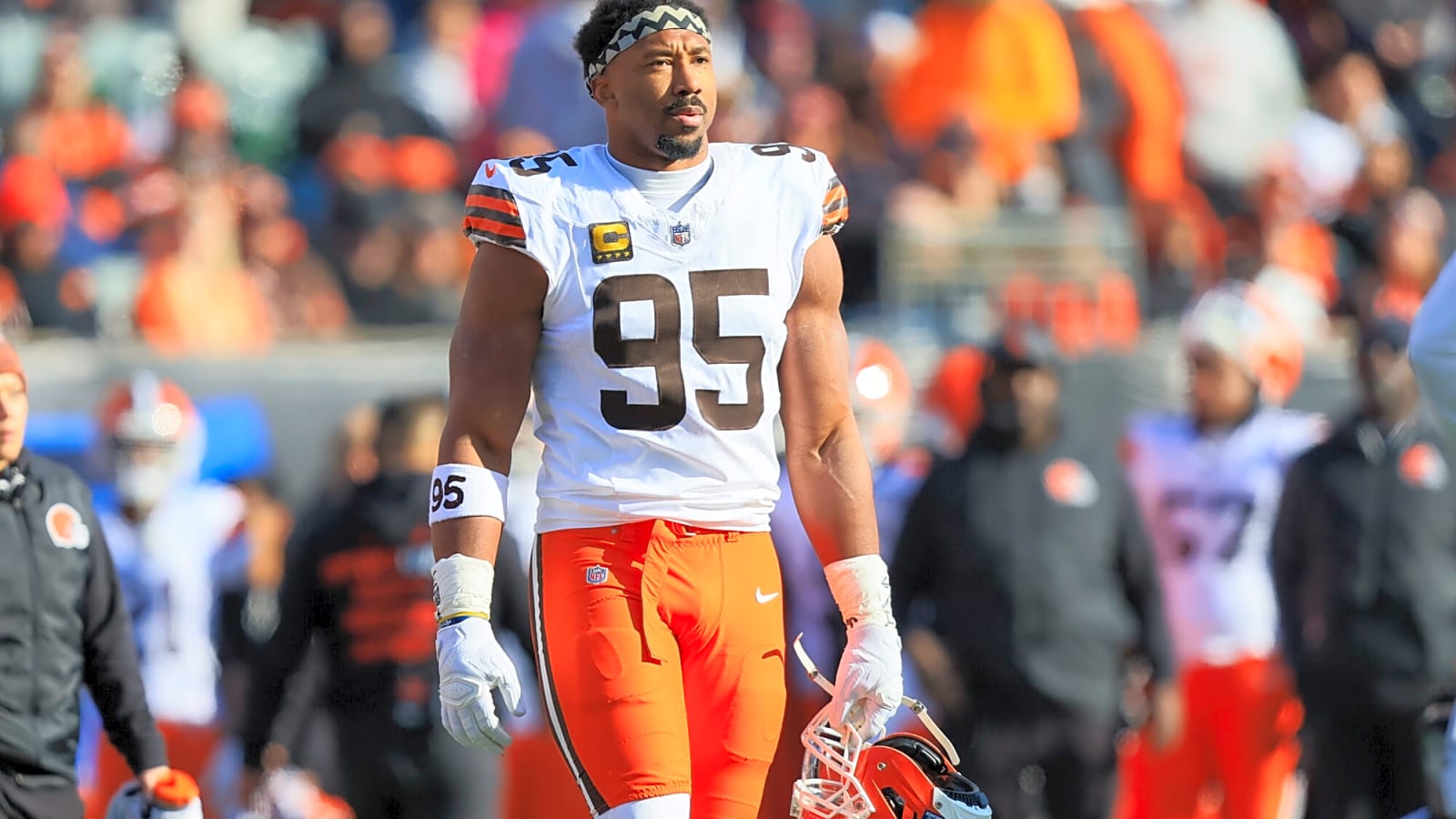
The call came after dark. Somewhere between the combine buzz and free agency’s opening bell, Baltimore’s front office did something the franchise had avoided for its entire existence. No first-round pick had ever left the building for a single veteran player. Not for Ray Lewis. Not for Ed Reed. Not for anyone. That changed on a Friday night in early March 2026, when the Ravens agreed to send two first-rounders to Las Vegas for edge rusher Maxx Crosby. Thirty‑one years of restraint, gone in one phone call — and then, days later, reversed when Baltimore backed out of the agreement after Crosby’s physical.
Desperation Math
Baltimore’s defense needed this. The Ravens finished 2025 with one of the NFL’s weakest pass rush profiles while their AFC North rivals paraded elite edge rushers: Myles Garrett in Cleveland, T.J. Watt in Pittsburgh, Trey Hendrickson in Cincinnati. Baltimore had Lamar Jackson, Kyle Hamilton, Roquan Smith, Marlon Humphrey. Everything except the one position that won the last two Super Bowls. The 14th overall pick in 2026 and a 2027 first-rounder were the price Baltimore was prepared to pay for Crosby’s 69.5 career sacks and five Pro Bowl selections — a price the Ravens ultimately decided not to pay once their doctors weighed in.
Broken Promise

The Raiders had promised Crosby he would never be traded. Then they shut him down late in the 2025 season with a knee injury, benching their most productive defender on a 3-14 team going nowhere. Crosby underwent meniscus surgery on his left knee in early January 2026. The shutdown enraged him. A player who had given Las Vegas 133 tackles for loss, a franchise record, suddenly wanted out. The promise of loyalty evaporated the moment the organization decided his value might be higher as trade capital than as a player.
Forced Grace

Crosby’s farewell-style video told two stories at once. “I feel like I left everything I had on the table for this team. I’ve given my heart and soul and I feel like that I let y’all down man.” Zero ill will, he said. Raider for life. But the same man confirmed the shutdown created his desire to explore a trade. The organization benched him. He resented it. They explored trading him and ultimately agreed to a deal with Baltimore that was later canceled. And he thanked them anyway. That’s not forgiveness. That’s a professional performing grief on camera while the knife is still warm.
The Veto

Multiple teams called Las Vegas. The Cowboys made a strong offer. The Jaguars submitted a bid. The Patriots put together a competitive package. But Tom Brady, the Raiders’ 5% minority owner, reportedly opposed the idea of sending Crosby to New England. “No way Tom was sending Maxx to Vrabel,” a source involved in discussions said, in one report. A minority shareholder with the smallest documented stake still helped steer a franchise‑altering decision because he didn’t want to strengthen a conference rival coached by a close friend turned competitor.
Arms Race
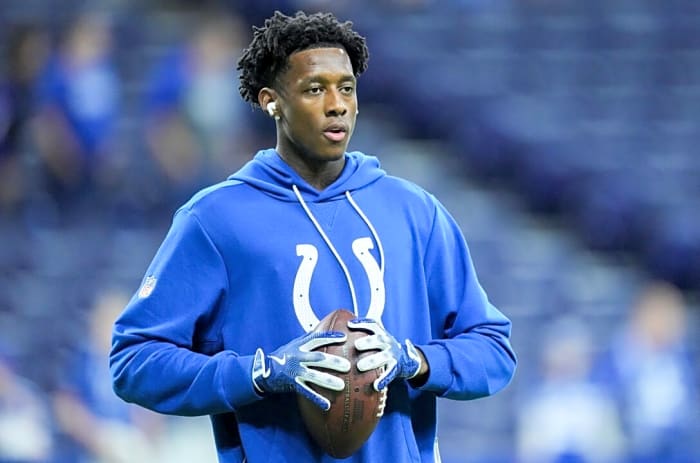
Three blockbuster moves and near‑moves for defensive stars, each built around multiple first-round picks, hit in roughly six months: Sauce Gardner to the Colts, Micah Parsons to the Packers, Crosby’s near‑move to Baltimore. That pace is unprecedented. The reason is simple: the last two Super Bowls were won by teams with superior defenses. Contenders watched and recalculated. Draft patience stopped looking smart. Proven pass rushers became the new quarterback-level trade commodity. Even before it collapsed, the Crosby agreement briefly nudged Baltimore’s odds up on futures boards, tying them closer to the AFC favorites.
Raider Fallout

Las Vegas turned the Crosby saga into a broader reset. The Raiders signed Tyler Linderbaum, Baltimore’s own former center, to a record three-year, $81 million deal with $60 million guaranteed, making him the highest-paid center in NFL history. They moved on from Geno Smith by trading him to the Jets in a late‑round pick swap while eating a significant amount of his salary and dead cap. They held the No. 1 overall pick and roughly a mountain of cap space. All that money and draft capital for a franchise that has cycled through roughly half a dozen coaches in about five years. Ammunition without a general.
New Rule

The old belief was clean: tank hard enough, draft high enough, and talent solves everything. The Raiders went 3-14 and still had to consider trading away their best defensive player to start over. Having the first overall pick was not enough capital to rebuild without potentially selling the franchise’s identity. Meanwhile, teams like Baltimore showed that the opposite model can work. Trade future picks for a proven star during your championship window. The last two Super Bowl winners did exactly that with their defenses. Tanking builds rosters. Trading wins trophies — if the deal actually makes it across the finish line.
Ticking Clock

Crosby’s knee surgery put him on a months‑long recovery timetable, with optimism he could be ready by the heart of the 2026 offseason. Any team acquiring him would have roughly a narrow window before training camp to integrate him into a new defensive scheme. In Baltimore’s case, that would have meant Jesse Minter, the former defensive coordinator now serving as the Ravens’ first-time head coach, replacing John Harbaugh after 18 seasons. The entire defensive identity would have hinged on a recovering knee and an untested coach. ESPN’s Dan Orlovsky said the proposed deal “eliminated excuses” for Lamar Jackson. That pressure cuts both directions: if this kind of swing fails, everyone involved owns it — which is exactly the calculus that helped push Baltimore to walk away.
Insider’s Edge

Here is what most people will miss about this almost‑trade. Brady’s stance revealed that a 5% ownership stake, the smallest with documented influence in recent NFL history, can help redirect a franchise‑defining player to a different conference — or keep him away from a rival altogether. Crosby’s public forgiveness masked a calculated exit, engineered through injury management and leverage. And Baltimore was willing, for the first time in franchise history, to put multiple first-round picks on the table for a single defensive star because the Super Bowl formula changed underneath everyone’s feet — only to reverse course at the last possible moment. The Patriots still need an edge rusher. The Raiders still have a disgruntled star under contract and a pile of assets. Nobody’s finished moving yet.
Sources:
“Raiders trading DE Maxx Crosby to Ravens for two first-round picks.” NFL.com, 6 Mar 2026.
“Sources: Ravens nixed trade for Crosby due to medical concerns.” ESPN, 10 Mar 2026.
“Maxx Crosby holds ‘zero ill will’ toward Raiders after trade, eyes Super Bowl with Ravens.” NFL.com, 7 Mar 2026.
“Raiders sign Tyler Linderbaum to three-year, $81 million deal.” Flashscore / Eric Himmelheber, 8 Mar 2026.
More must-reads:
- Insider shares notable update on Shedeur Sanders' status with Browns
- Travon Walker's contract extension could be long-term steal for Jaguars
- The 'Rushing-TD leaders by NFL team' quiz
Breaking News
Trending News



Customize Your Newsletter
 +
+
Get the latest news and rumors, customized to your favorite sports and teams. Emailed daily. Always free!
PRIVACY POLICY COOKIE POLICY CONTACT US
ABOUT YARDBARKER TERMS OF SERVICE


By using this site, you agree to our Terms of Service and Privacy Policy.
This site is for entertainment purposes only.
There is no gambling offered on this site.
Gambling Problem? Call 1-800-Gambler.
