As NFL rules have changed, defensive backs' job descriptions have transitioned. Here is our best attempt at identifying the premier DB performer in each NFL franchise's history.
Focus on Sport/Getty Images
Credited with innovating the safety blitz, Wilson shone during one of the Cardinals' many down periods. Exclusively a St. Louis Cardinal, Wilson camped on the All-Pro first team in his prime. He was honored as such in five straight seasons from 1966-70, making eight Pro Bowls over the course of his career. Wilson's best season came in 1966, when he finished second in MVP voting to Bart Starr. Wilson intercepted 10 passes and took two back for scores. The Hall of Famer nabbed 52 INTs and scored five touchdowns in 13 Cardinals seasons. Although sacks were not officially recognized until 1982, the acclaimed blitzer is retroactively credited with 21.
Gin Ellis/Getty Images
A 1989 draft that included four Hall of Famers in the top five picks sent Sanders to Atlanta. Following Troy Aikman, Derrick Thomas, and Barry Sanders off the board, Deion played five seasons with the Falcons. Prime became one of the greatest defenders in NFL history, displaying transcendent athleticism as a lockdown cover corner. Sanders led Atlanta's "2 Legit 2 Quit" 1991 team to the playoffs and earned first-team All-Pro acclaim in 1992 and '93. Returning a punt for a touchdown in his first game, Sanders scored 10 touchdowns -- through four varieties -- in his five Falcons seasons. Sanders moonlighted as a Braves outfielder from 1991-94 as well.
Allen Kee/Getty Images
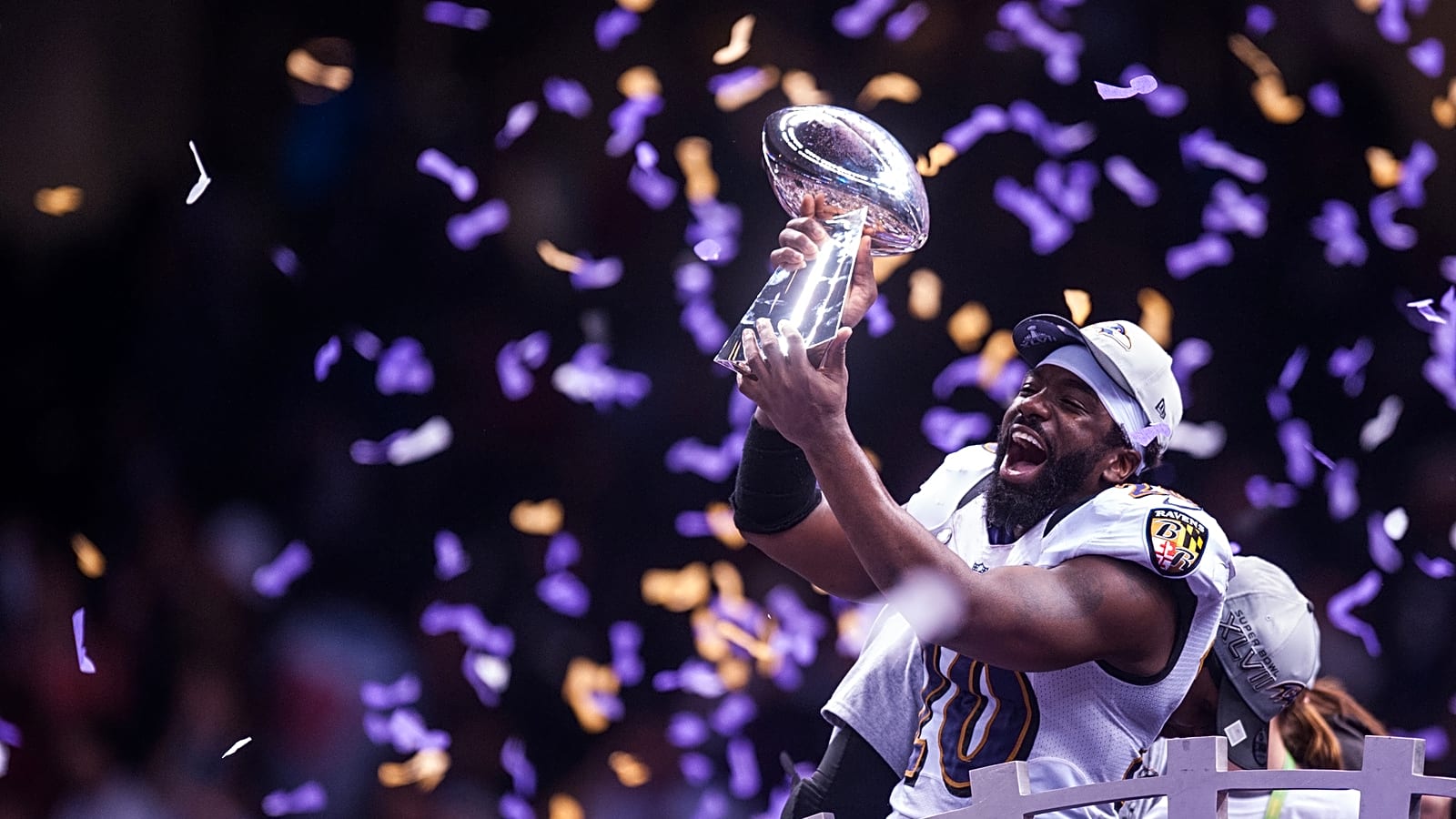
A do-it-all defender, Reed spent 11 seasons in Baltimore and presented the best case for the safety position's kingpin. The 2002 first-rounder intercepted 64 passes. While that ranks seventh all-time, Reed's 1,590 return yards are the most in NFL history. The all-time playmaker gave the Ravens an unmatched weapon on the back end. Booking all eight of his All-Pro honors in Baltimore, Reed earned Defensive Player of the Year acclaim in 2004 and led the NFL in INTs two more times (2008, 2010). Reed scored nine defensive touchdowns, breaking his own record for longest INT return (106 yards, then 107), and closed his Ravens stay on a goal-line stand that secured a Super Bowl win.
James Drake/Getty Images
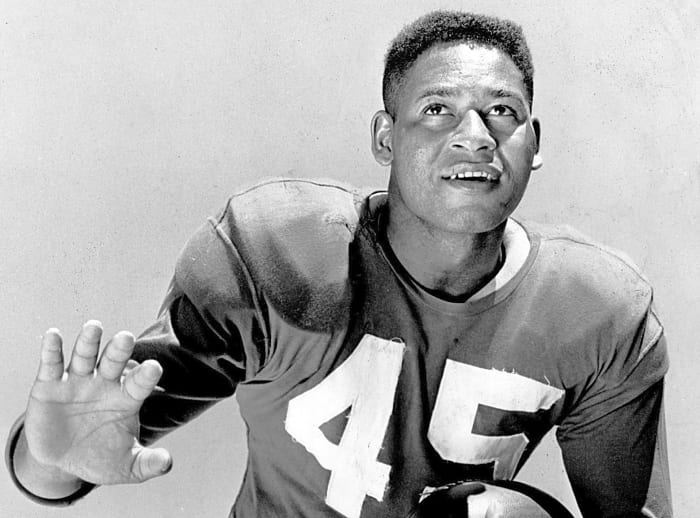
The Bills featured a dependable safety tandem during their Sean McDermott years (Micah Hyde-Jordan Poyer), but Byrd shone for the franchise's only championship teams. The 1960s Bills claimed two AFL titles (1964-65). Byrd started for both squads in a seven-season Buffalo career. The 1964 draftee intercepted a pass in each of the Bills' two AFL title game triumphs and finished his career with 40 thefts. The standout cornerback earned three first-team All-AFL nods, returning a pick for a touchdown in five separate seasons. Byrd intercepted at least five passes in six of his seven Buffalo seasons.
Craig Jones/Allsport/Getty Images
Jaycee Horn is coming fast, but Davis is the pick due to consistency. Signed as part of an impact free agent class in 1996 -- one that assembled a No. 2-ranked defense that drove the Panthers to the NFC championship game in the franchise's second season -- Davis made the Pro Bowl in his first Charlotte season. The former 49ers Super Bowl XXIX starting cornerback intercepted five passes that season and managed to repeat that feat in each of his additional four Carolina campaigns. Davis, who also forced four fumbles in 2000, was a five-year Panthers starter during a 13-year career.
Gary I Rothstein/Icon Sportswire
The Bears do not have an open-and-shut answer here, but the pick is a player who popularized today's most commonly used fumble-forcing technique. The Dick Fosbury of NFL DBs, Tillman forced an astounding 44 fumbles. The 12-year Bears cornerback's "Peanut Punch" was responsible for many. Part of a Bears Super Bowl XLI team rostering Hall of Famers Devin Hester and Brian Urlacher, Tillman started 164 games and earned two All-Pro honors. His lone first-team selection came in 2012, when he forced 10 fumbles -- most by a corner since forced fumbles have been tracked (back to the 1970s). Four came in one game against the Titans. Only five seasons of a CB forcing six fumbles exist; Tillman has two of them.
B Bennett/Getty Images
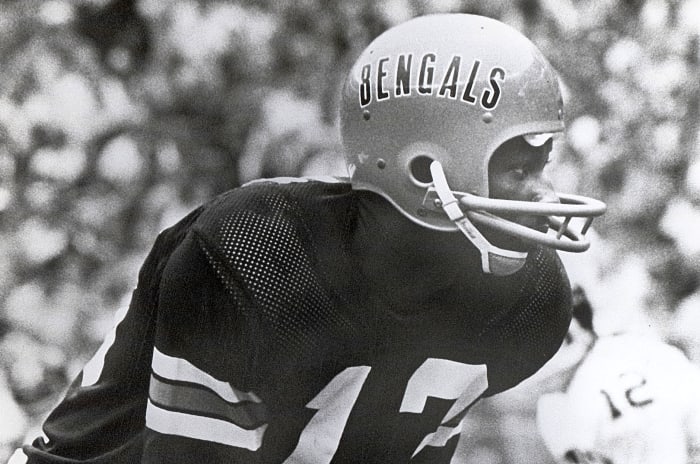
The Bengals featured a lockdown cornerback tandem for a period in the 1970s. At the time, Lemar Parrish was the higher-regarded player, evidenced by his eight Pro Bowl invites (to Riley's zero). This left Riley more opportunities, however, and the Bengals' No. 2 cornerback capitalized often. Riley retired with 65 interceptions during a 15-year career spent only in Cincinnati. Riley's Hall of Fame induction, via the senior committee route, was interesting as Parrish is not enshrined despite being viewed as the better player. Riley is this space's pick as well because his 15 Bengals seasons outpace Parrish's eight.
George Gojkovich/Getty Images
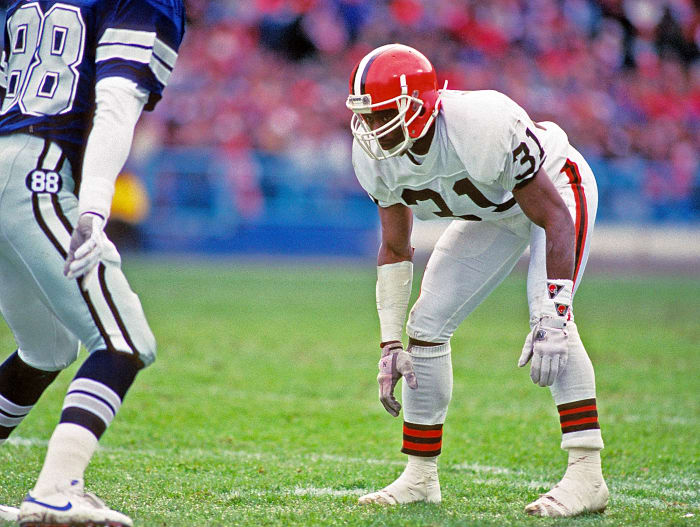
Brought to Cleveland as a free agent after a year in the USFL, Minnifield formed a high-end cornerback tandem with Hanford Dixon. The Browns deployed that duo together for six seasons; five playoff berths followed. Just 5-foot-9, Minnifield caught All-Pro voters' eyes by the late 1980s. He landed on the AP first team once and the second team twice from 1987-89. Notching a pick-six in the Browns' divisional-round win over the Colts in 1987, Minnifield was one of the NFL's best corners for several seasons. He and Dixon were also instrumental in the creation of Cleveland's "Dawg Pound" section.
James Drake/Getty Images
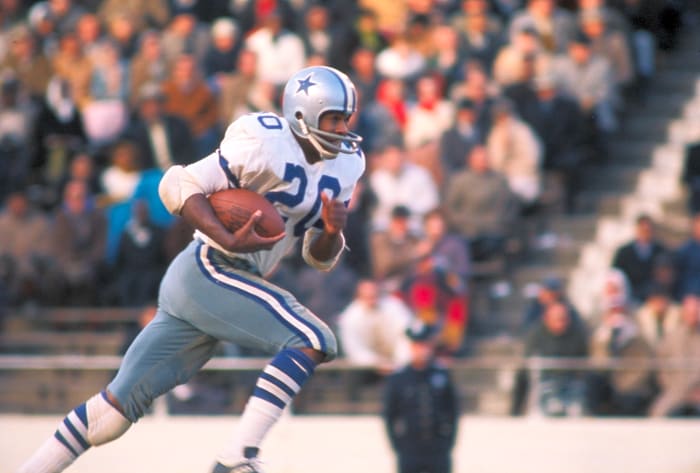
Renfro successfully made an atypical transition, moving from safety to cornerback midway through his career. The Cowboys slid Renfro to corner in his seventh season, and he camped at the younger man's position for eight years. Renfro enjoyed a 14-year career, making 10 Pro Bowls (six at safety, four at corner). Never a first-team All-Pro, Renfro nabbed four second-team honors and played in three Super Bowls. In his first two seasons at corner, Renfro intercepted a combined 17 passes (three in the 1970 playoffs). Also a skilled return man, Renfro intercepted at least seven passes in three seasons in a 52-INT career.
Rich Gabrielson/Icon Sportswire
One team (Washington) overvaluing running backs led Denver to pilfer a first-ballot Hall of Fame cornerback in 2004. The Broncos traded Clinton Portis for Bailey, and Washington threw in a second-round pick (future 1,000-yard RB Tatum Bell). Bailey played 10 seasons in Denver, making eight Pro Bowls and landing on five All-Pro teams. Bailey enjoyed an impact in the mid-2000s -- 18 INTs, three pick-sixes from 2005-06 -- as he helped the Broncos to the 2005 AFC championship game. By the late aughts, teams stopped testing the dominant corner. The Broncos struggled to find dependable No. 2 corners, but Bailey remained great into his mid-30s. He closed his career in Super Bowl XLVIII.
Tim Culek/Getty Images
It is difficult to overlook Night Train Lane here, but his career was split between three teams. He did not debut with Detroit until age 32. By then, the Lions had seen Christiansen dominate as the best safety of his era. Playing just eight NFL seasons (all with Detroit), Christiansen received six first-team All-Pro honors and was essential in the Lions' 1950s dynasty formation. A rangy defender, Christiansen intercepted 46 passes -- including 12- and 10-INT years -- and helped a stacked Lions secondary (also including Hall of Famer Yale Lary and All-Pro Jim David) motor to three NFL titles from 1952-57.
James Drake/Getty Images
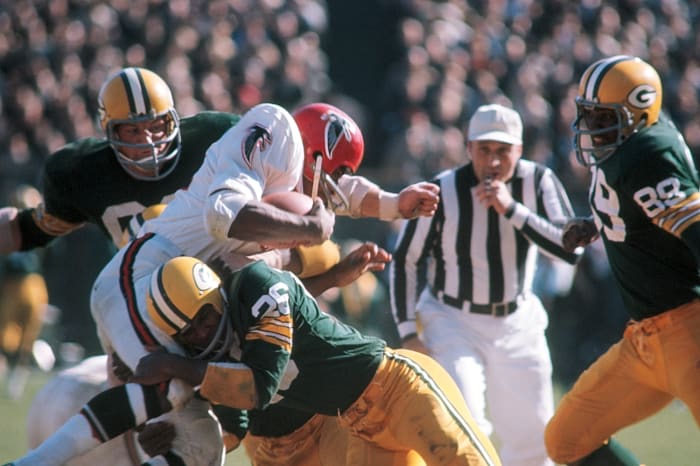
A near-dead heat between Adderley and fellow Hall of Famer Willie Wood came down to the cornerback's playmaking ability. The Packers featured two 1960s All-Decade DBs who retired with 48 interceptions. Adderley finished his 12-year career with three Cowboys seasons, but all eight of his pick-sixes -- including one to bury the Raiders in Super Bowl II -- came with Green Bay. The dominant cornerback, a 1961 Packers first-round pick, was a five-time first-team All-Pro. Among corners, only Deion Sanders garnered more. Adderley finished his career with 1,046 return yards and closed the Pack's 1965 championship season with three pick-sixes.
Thomas Shea-Imagn Images
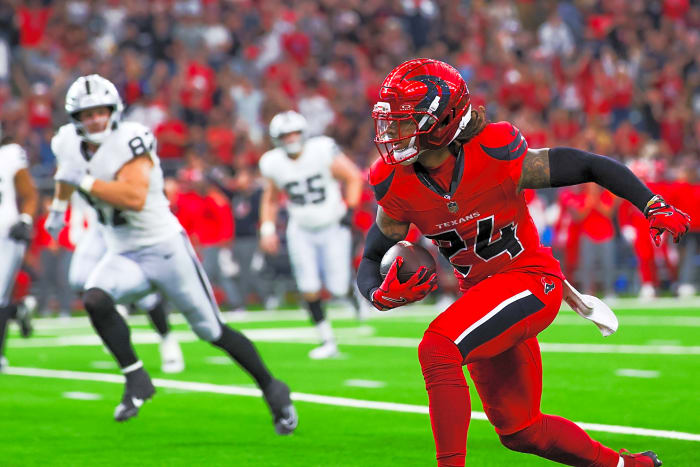
The Texans have seen impressive players come through on the front seven, but success has been sparser in the secondary. Stingley's second All-Pro season gives him the edge over Johnathan Joseph and Dunta Robinson. The No. 3 overall pick in 2022, Stingley has made back-to-back All-Pro first teams. The lockdown cover man may be the NFL's top challenger to cornerback kingpin Patrick Surtain. Stingley outdid Surtain on his extension -- three years, $90 million, moving the CB market forward -- and anchors a smothering defense under DeMeco Ryans.
14 of 32
Indianapolis/Baltimore Colts: Bobby Boyd
Focus on Sport/Getty Images
Boyd's career spanned nine seasons in the 1960s, and he was a regular starter at cornerback throughout. Boyd played his full career in Baltimore. Despite stopping shy of a decade, he intercepted 57 passes. Among players who played fewer than 10 seasons, that ranks first all-time. The list's next-closest player whose career stopped by Year 9 -- Jack Butler -- intercepted 52 passes. Boyd intercepted nine passes in back-to-back seasons (1964-65) and earned All-Pro acclaim four times. He closed his career with eight thefts on a dominant Colts defense that allowed only 10.3 points per game en route to Super Bowl III.
Icon Sportswire
Is Jalen Ramsey better? Yes. But the Jaguars traded the potential Hall of Famer barely three years into his career. The pick is Mathis, a 10-year Jaguar who matched Ramsey in first-team All-Pro nods with the franchise (one). The 2003 second-round pick's 30 interceptions with the Jaguars double the next-closest interceptor. Eight of those picks came in the cornerback's All-Pro 2006 season. Mathis was the No. 1 corner on two Jags playoff teams (2005, '07), and he made 129 starts with the franchise. No Jaguar defender has made more starts with the team.
Focus on Sport/Getty Images
The 1960s Chiefs deployed a roster that featured six future Hall of Famers, joining the '60s Packers in that regard. Joining Bobby Bell, Willie Lanier, Buck Buchanan, Curley Culp and Emmitt Thomas on Kansas City's smothering Super Bowl IV defense, Robinson played 12 Chiefs seasons. The converted running back was a 10-year safety starter for the Dallas Texans and Chiefs. The six-time first-team All-Pro notched two 10-interception seasons in a 57-INT career and picked off four more playoff passes -- including two in the Texans' double-OT AFL title game triumph over the Oilers in 1962 -- his first safety season.
17 of 32
Las Vegas/Oakland Raiders: Willie Brown
Digital First Media Group/Oakland Tribune via Getty Images
Had Charles Woodson or Mike Haynes gone wire-to-wire as Raiders, they would have compelling cases. But Brown's longevity, playing through age 38, wins out. Too big a chunk of Woodson's prime came in Green Bay. Author of an iconic NFL Films-enhanced pick-six against the Vikings in Super Bowl IX (at 36), Brown earned six of his seven All-Pro honors as a Raider. Traded from the then-moribund Broncos in 1966, Brown helped the Raiders become a perennial contender. He anchored secondaries in Oakland for a decade, producing three playoff pick-sixes, including a decisive 50-yarder to down the Dolphins in the 1970 divisional round. Brown was a first-ballot Hall of Famer.
Kirby Lee-Imagn Images
Rodney Harrison played nine seasons with the Chargers, earning an All-Pro honor (and a reputation as a dirty player). James has now played in eight, and he has been named to the All-Pro team. A first-teamer as a rookie, James has since collected three second-team honors as he has stayed healthy following early-career injury trouble. Missing most of the 2019 season and all of 2020, the dynamic safety plays myriad roles for the Chargers. He excelled in Jesse Minter's defense, which ranked first in 2024, and became a key reason the injury-plagued team advanced to two playoff fields from 2024-25.
Focus on Sport/Getty Images
Cromwell was one of his era's best DBs, earning acclaim for being an all-around safety talent who shone on a perennial contender. The Rams drafted Cromwell in the 1977 second round and began to use him as a starter in their 1979 Super Bowl XIV season. Cromwell was a 1980s All-Decade safety, earning three first-team All-Pro honors from 1980-82. Cromwell added 12 forced fumbles and five blocked punts to a resume including 37 interceptions. The Rams could not count on solid quarterback play for most of this stretch, but Cromwell was a reliably great piece during the Ray Malavasi and John Robinson eras.
James Flores/Getty Images
This space regards the 1973 Dolphins team as superior to the lauded 1972 unbeaten team. Miami bulldozed a tough schedule in '73, going 12-2. Anderson finished that season as the Defensive Player of the Year, intercepting eight passes and returning two for touchdowns. Anderson intercepted 34 passes and added five more in the playoffs to help the Dolphins to three straight Super Bowls. The All-Decade teamer comprised half of a strong safety duo with Jake Scott. A cornerstone of Miami's No Name Defense that led the NFL in scoring in both the Super Bowl VII- and VIII-winning seasons, Anderson spent his entire 10-year career in Miami.
JOHN CROFT/Star Tribune via Getty Images
Krause remains the NFL's all-time interception leader -- with 81. Twenty-eight of Krause's thefts came with Washington, but the Hall of Fame safety is better remembered for 12 Minnesota seasons. While not quite in the conversation for greatest safety ever, Krause is certainly an all-time ballhawk. The longtime Vikings free safety was a six-time All-Pro who started for all four Minnesota Super Bowl teams from 1969-76. Krause intercepted at least six passes in five Vikings seasons. Yes, DBs had freer rein in this era, but offenses also passed at lower rates. Only one player (Emlen Tunnell) is within 10 INTs of Krause all-time.
Diamond Images/Getty Images
Haynes is one of the greatest cornerbacks in NFL history. Even though he changed teams mid-career, the ultra-talented defender outflanks anyone from the Bill Belichick years. Haynes earned All-Pro honors in six of his seven Patriots seasons. His 6-foot-2 frame and athleticism made him a daunting presence for wide receivers facing New England during the late 1970s and early '80s. The 1976 Defensive Rookie of the Year intercepted eight passes in his NFL debut. While Ty Law's playoff interceptions and 10-year run make this close, Haynes -- who forced a trade (to the Raiders) in 1983 -- is one of the more underrated Hall of Famers.
Stephen Lew-Imagn Images
Injuries derailed Lattimore in New Orleans, but his early-career work proved just enough to secure this distinction. Lattimore earned four Pro Bowl honors with the Saints, the first of which came after a Defensive Rookie of the Year season in 2017. The eight-season Saints cornerback became Sean Payton's Patrick Mahomes consolation prize at No. 11 overall, and he catalyzed a defensive turnaround. The Saints had featured a sieve-like secondary in the mid-2010s, keeping Drew Brees out of the playoffs. New Orleans roared back, making four straight postseason berths in Lattimore's first four seasons as he served as the team's top cover man.
NY Daily News Archive via Getty Images
Tunnell paired a hard-hitting skillset with historically elite ball skills. The 14-year veteran retired with 79 interceptions. When the Hall of Fame safety exited the game, he was 21 INTs ahead of second-best on the all-time list. The Giants assembled an all-time great defense by 1956; Tunnell was a pillar on that storied unit. Tunnell intercepted at least six passes in each of his first 10 years, reaching 10 (and two TDs) in 1949. Yes, DBs had far fewer restrictions in this era. But Tunnell was highly regarded as an all-around safety, earning six All-Pro honors and being named to the All-Decade Team in the '50s. The 11-year Giant followed Vince Lombardi to Green Bay in 1959.
Rich Kane/Icon Sportswire
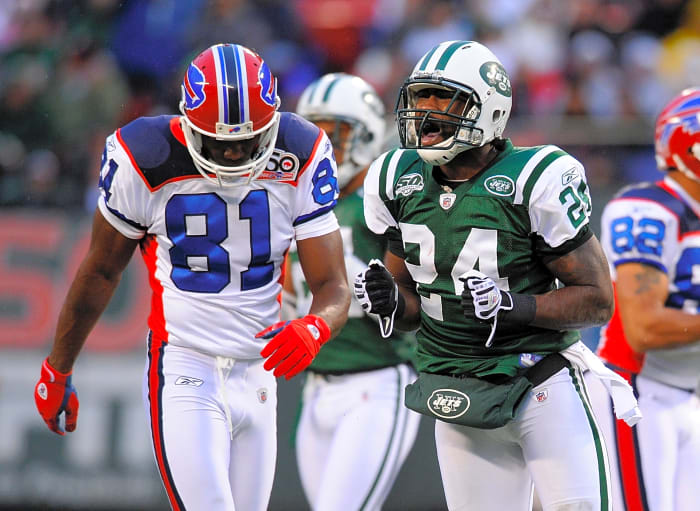
Revis' prime did not rival Champ Bailey or Charles Woodson's in length, but the first-ballot Hall of Famer may have had a better apex. The Jets regularly let Revis deal with opponents' No. 1 wide receivers, as Rex Ryan allocated his other defenders elsewhere. The result created one of the great nicknames in NFL history. Revis Island stranded foes during the 2007 first-rounder's first stint in New York. That included three straight first-team All-Pro honors (2009-11). That stretch doubled as the Jets' best 21st-century period, as the defense propelled a Mark Sanchez-quarterbacked offense to consecutive AFC championship games. The Jets traded Revis to the Buccaneers in 2013.
Brian Garfinkel/Icon Sportswire
One of the most fiery presences in modern NFL history, Dawkins ran wild in Philadelphia for a 13-season span. The Hall of Fame safety joined the Eagles as a 1996 second-round pick, and he set the tone for defenses that helped turn the team around. Dawkins was the leader of the Eagles' defense that produced four straight NFC championship game appearances in the early 2000s; the 2001, '02, and '04 units ranked second in scoring to provide Donovan McNabb and Co. support. "Weapon X" earned four first-team All-Pro honors from 2001-06 and was part of a fifth Eagles squad that booked an NFC title game berth (2008). Dawkins joined the Broncos in 2009.
George Gojkovich/Getty Images
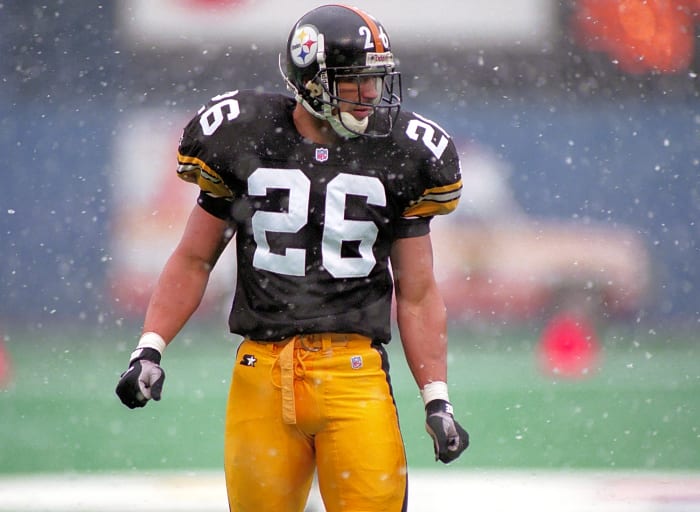
Deion Sanders's continued presence in the spotlight has, in a way, led to Woodson being underrated. Nearly as well covered as Sanders, Woodson played longer and made a successful transition to safety. The three-time Super Bowl starter only played corner in Pittsburgh, and while Mel Blount is the more celebrated player, Woodson navigated a tougher era to play the position. Woodson matches Sanders' eight All-Pro placements, earning six first-team nods (five with Pittsburgh), and is third all-time with 71 INTs. The super-athletic DB scored six defensive TDs during 10 Steelers seasons (1987-96). The Chuck Noll first-rounder anchored Pittsburgh's defense during Bill Cowher's early years.
David Madison/Getty Images
The best safety of his era, Lott energized the 49ers' defense during their dynastic stretch. San Francisco regularly sported top-10 defenses to back Joe Montana and Co. during this period, and Lott was the ringleader. Lott is best known at safety, but he began his career as a quality cornerback, lining up out of position from 1981-84. Lott was 4-for-4 in Pro Bowl accolades at corner, earning All-Pro recognition at the position as a rookie. Turning the 49ers defense around (and losing part of a finger), the hard-hitting DB entrenched himself on the All-Pro first team from 1987-90 and nabbed 51 of his 63 career INTs with the 49ers en route to four Super Bowl rings.
George Gojkovich/Getty Images
Lott has labeled Easley a more talented safety, and the Seattle dynamo was drafted ahead of the higher-regarded 49er in 1981. The Seahawks chose Easley third overall -- five spots ahead of Lott in an impact top 10 for defenders (Lawrence Taylor went second) -- and saw him soar to Defensive Player of the Year acclaim in 1984. A strong coverage safety and a thumper, Easley made five Pro Bowls and three All-Pro first teams despite playing only seven seasons. A kidney issue ended Easley's career at 28 and put him at odds with the Seahawks. But the Hall of Famer made a major impact in his short time in Seattle.
Mark LoMoglio/Icon Sportswire
Monte Kiffin's chess piece, Barber, helped increase the slot cornerback position's notoriety. The Bucs regularly shifted Barber inside, and he became a menace in Kiffin's Tampa-2 defense. Barber played 15 seasons -- all in Tampa -- and made five All-Pro teams. Barber was a big-play machine, scoring 12 defensive TDs -- 13 if a 92-yard playoff pick-six in Philadelphia is included -- as one of four Hall of Famers on Kiffin's defense. Teaming with fellow Hall of Famer John Lynch in Tampa Bay's secondary, Barber was part of a historic 2002 Bucs defense. Barber stamped the Bucs' trip to Super Bowl XXXVII with his theft of Donovan McNabb, leading the Bucs to a Super Bowl they dominated.
Ron Kuntz Collection/Diamond Images via Getty Images
Houston's Hall of Fame career included more time in Washington, but he offered the Oilers elite playmaking ability in a six-year Houston run. The 1967 ninth-round pick became an immediate starter at safety. In three of his six Oilers seasons, Houston returned at least two interceptions for touchdowns. This included a four-pick-six in 1971. Houston finished with nine returns for scores in 14 seasons; all nine came as an Oiler. A Pro Bowler for 12 straight years, Houston notched five of those with the Oilers. The AFC team traded the star DB as it bottomed out in the early 1970s.
Bettmann/Getty Images
While other cornerbacks have excelled into their mid-30s, Green outlasted everyone by playing until age 42. The physical specimen is one of the fastest players in NFL history, famously retaining his speed into his early 40s. The 1983 first-round pick made seven Pro Bowls and was part of two Super Bowl-winning teams. Green helped set up both. He returned a punt for a touchdown in a 1987 divisional-round win in Chicago and broke up a potential Vikings game-winning pass a week later. Green returned an INT for a score in a Washington 1991 NFC championship game romp over Detroit. Teammates with Joe Theismann (born 1949) and Patrick Ramsey (1979), Green intercepted 54 passes and scored 11 TDs.



 On Facebook
 On Flipboard
 On Twitter











 +
+